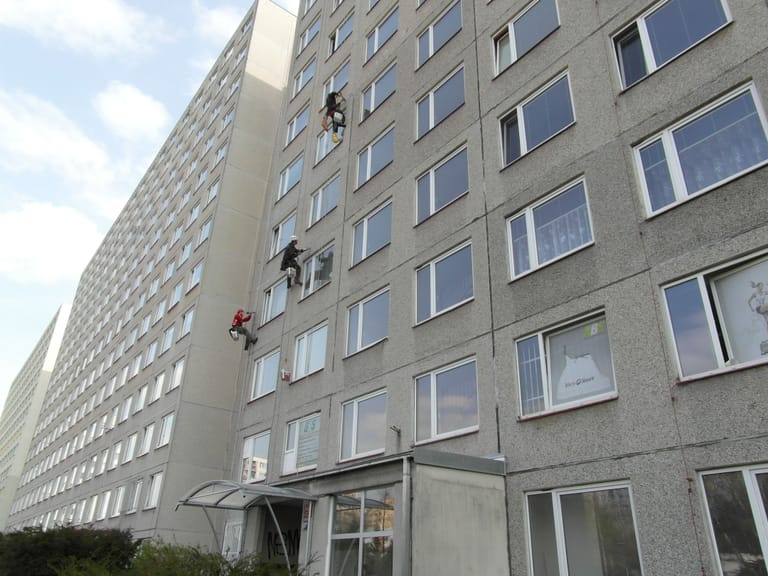

Why not underestimate regular window maintenance
Windows are constantly exposed to dust, pollen, rainfall, smog and other impurities from the surrounding environment. These deposits gradually accumulate on glass, frames and windowsills and can negatively affect not only the appearance of the building, but also the amount of natural light in the interior.
In addition, in office buildings, shopping centers or hotels, clean windows significantly influence the first impression of visitors and customers. Therefore, regular care is not only a question of aesthetics, but also part of the proper maintenance of the building.
How often to wash the windows of apartment buildings
In apartment buildings, it is most often recommended to wash the windows once or twice a year. In most cases, maintenance takes place in the spring after the winter season and then in the fall before the arrival of the colder months.
If the building is located near a busy road, an industrial area or a railway line, it may be advisable to clean the windows more often. A higher concentration of dust and emissions causes faster contamination of glass surfaces.
How often to wash windows in office and commercial buildings
Office buildings, shopping centers, hotels or administrative buildings tend to be significantly more sensitive to the appearance of the facade and windows. In these cases, it is recommended to wash the windows usually two to four times a year.
For representative objects or buildings with a lot of client traffic, more frequent maintenance may be appropriate. Clean windows help create a professional impression and increase the comfort of employees and visitors.
What affects the frequency of window washing
There is no universal interval that suits all buildings. Several factors influence the need for washing.
Among the most important are:
building location
proximity to roads and industrial plants
the amount of trees and greenery in the vicinity
orientation of the building to the wind
climatic conditions
the object's purpose of use
Buildings in cities tend to get polluted faster than buildings in quieter locations.
What problems can be caused by neglected window washing
Long-term accumulation of dirt does not only mean a worse appearance of the building. Some types of pollution can have a negative effect on the surface of the glass and frames over time.
The most common problems include:
reducing the penetration of daylight
deterioration of the appearance of the building
limescale build-up
formation of resistant impurities
more demanding subsequent cleaning
Therefore, regular maintenance is usually simpler and more economical than removing pollution that has been neglected for a long time.
How professional high-rise window cleaning works
In taller buildings, access to the windows tends to be complicated. In such cases, work at height is used, which enables safe and effective cleaning without the need to build scaffolding.
work-at-height technicians use professional equipment and cleaning products designed for glass surfaces. Thanks to this, it is possible to achieve a perfectly clean result without streaks, while at the same time minimizing restrictions on the operation of the building.
Frequently asked questions
How often should the windows of an apartment building be washed?
In most cases, washing once or twice a year is sufficient. The exact interval depends on the location of the building and the level of pollution.
How often to clean office building windows
Usually two to four times a year. For representative objects, more frequent maintenance may be appropriate.
Dirty windows can damage the glass
Long-term deposits of dirt and scale can make cleaning difficult and in some cases negatively affect the surface of the glass.
When is the best time to wash windows?
Windows are most often cleaned in spring and autumn, or according to the individual needs of the building.
Regular window cleaning is an important part of maintaining residential and commercial buildings. It helps preserve the representative appearance of the building, improves the passage of light into the interior and facilitates the long-term care of glass surfaces. In addition, a correctly set cleaning interval helps prevent unnecessary costs for more demanding maintenance in the future.