What are emergency work at height?
Emergency works at height represent quick interventions on buildings, the aim of which is to remove or secure dangerous parts of the building. Most often, these are situations where there is a risk of building elements falling, leaking into the building or further damage to the structure due to the weather.
In contrast to planned repairs, the main goal of emergency intervention is to ensure the safety of people, property and the surrounding area as quickly as possible.
Which situations require immediate intervention
Not every building problem means a crash. However, there are situations when it is not advisable to postpone the repair.
The most common emergency conditions include:
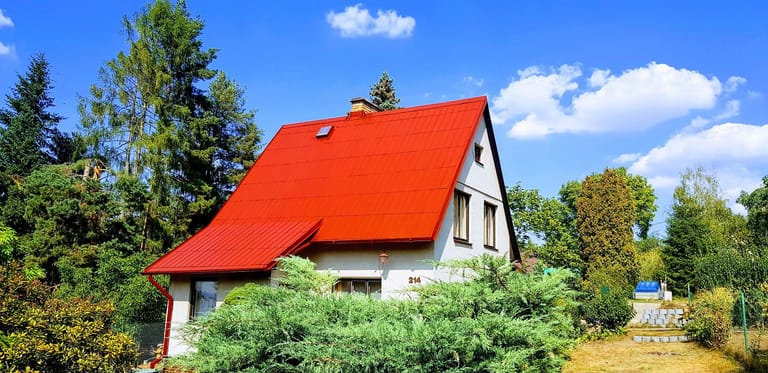
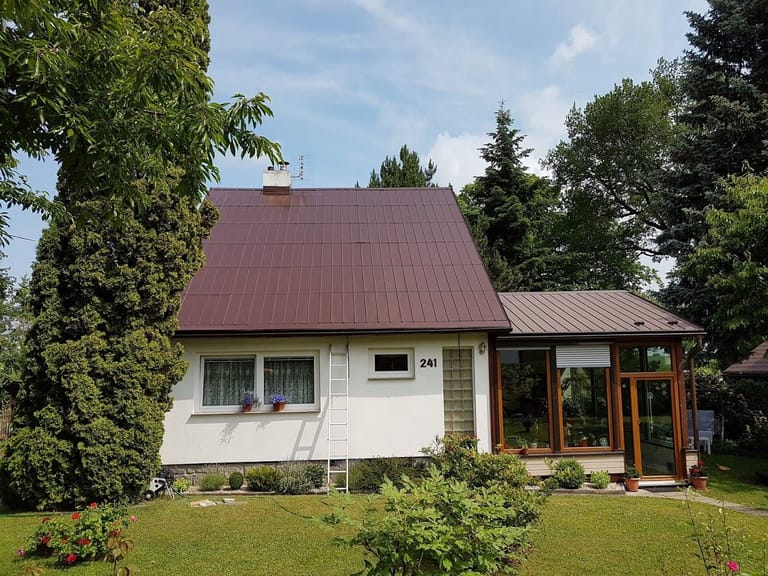
loose roof tiles or sheets
falling plaster or cornice
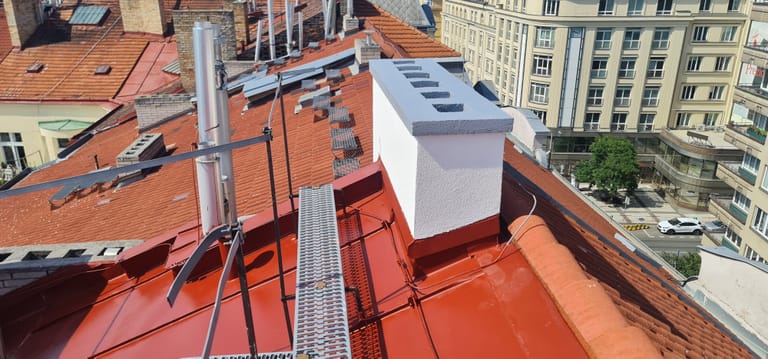
damaged chimney
leaking roof after heavy rain
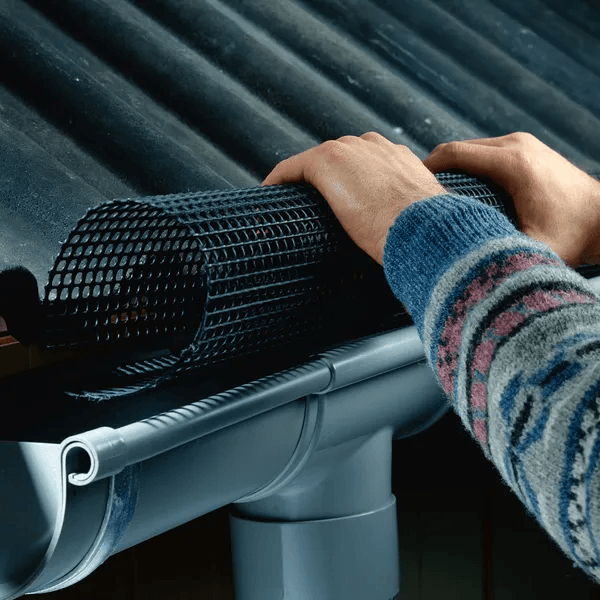
torn or loose gutter
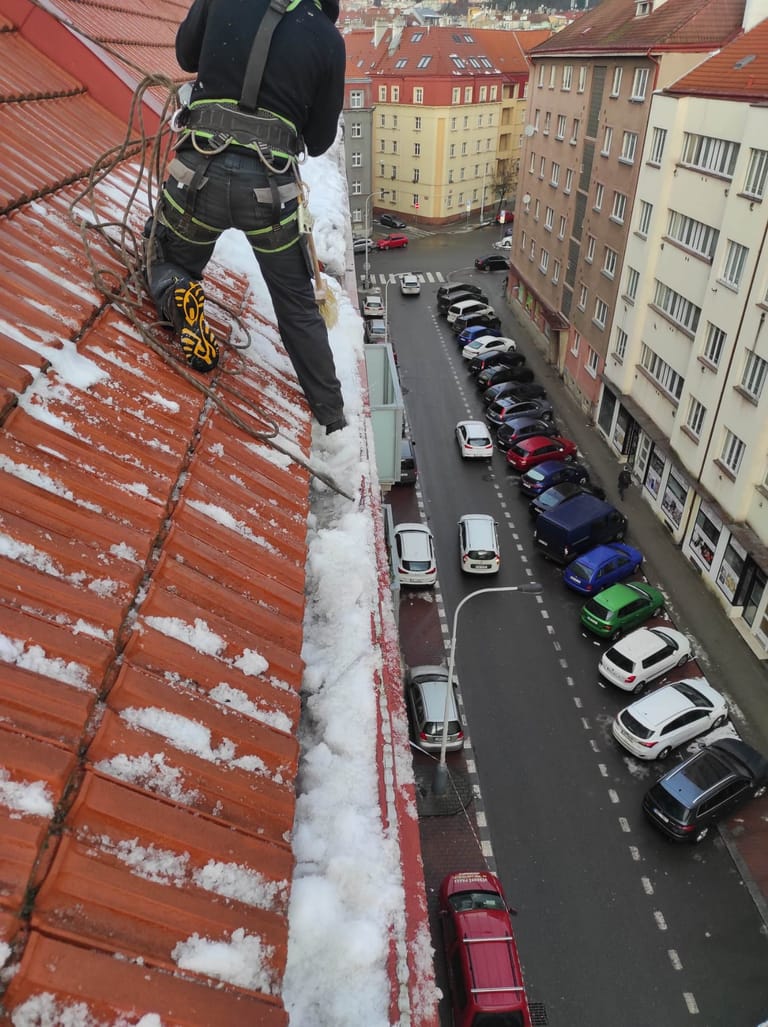
dangerous icicles and snow overhangs
broken branches threatening the surroundings
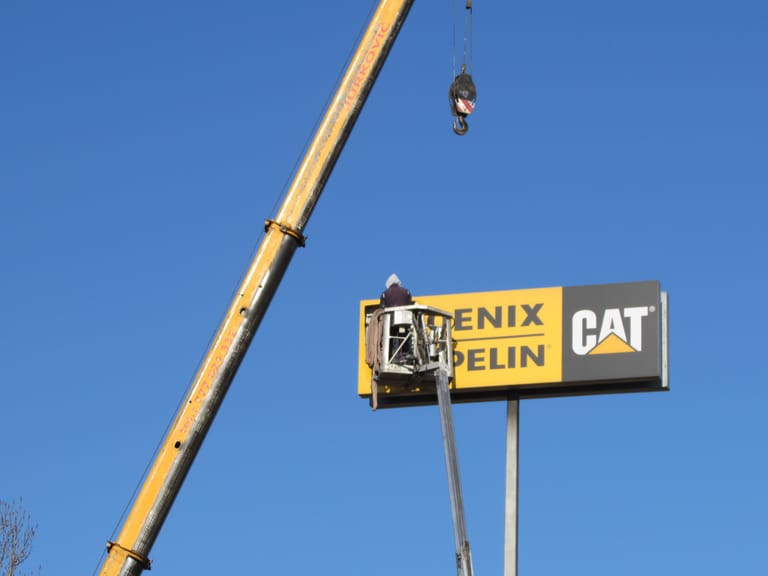
loose advertising structures or technical elements
In all of these cases, there may be a risk to the health of people or other damage to the building.
Why emergency interventions are not worth postponing
Damage to an object often worsens within hours or days. Wind can dislodge other parts of the roof, water seeping into the structure can damage insulation or the interior, and a small defect can turn into a major renovation.
Timely security of the building helps minimize the extent of damage and often saves repair costs as a result.
What to do in a building collapse
If you discover damage to the roof, facade or other part of the building, it is important to remain calm and not try to fix the problem yourself.
The recommended procedure is as follows:
do not enter under the damaged area
prevent other people from entering the danger zone
take photos from a safe distance
note the extent of the damage
contact a specialist company
If a structure is at immediate risk of falling or a public area is endangered, contact the emergency services first.
How an emergency intervention at high altitude takes place
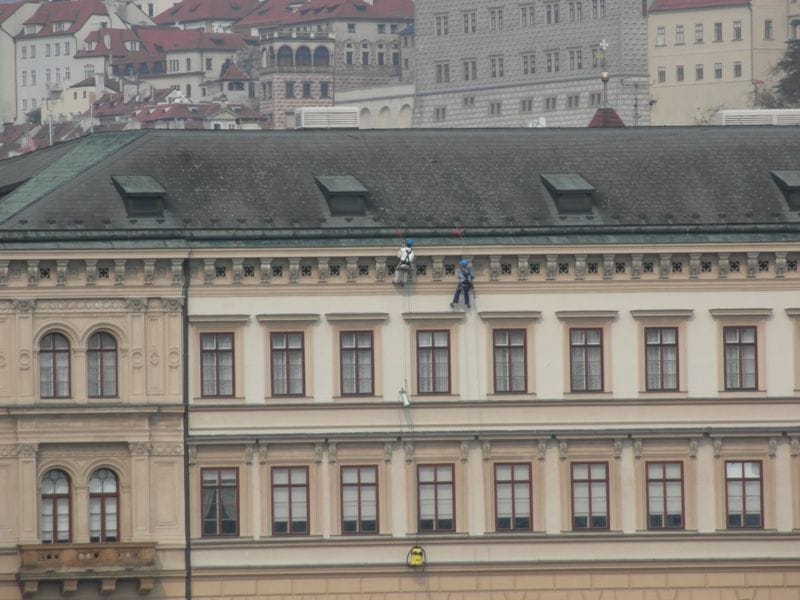
Every intervention begins with an assessment of the situation. The technician will assess the extent of the damage, suggest the safest method of access and decide on the necessary equipment.
The first priority is to remove the immediate danger. Temporary stabilization or a local repair of the damaged part follows. If a permanent repair cannot be completed immediately, we prepare a plan for the next steps.
What are the advantages of working at height in accidents?
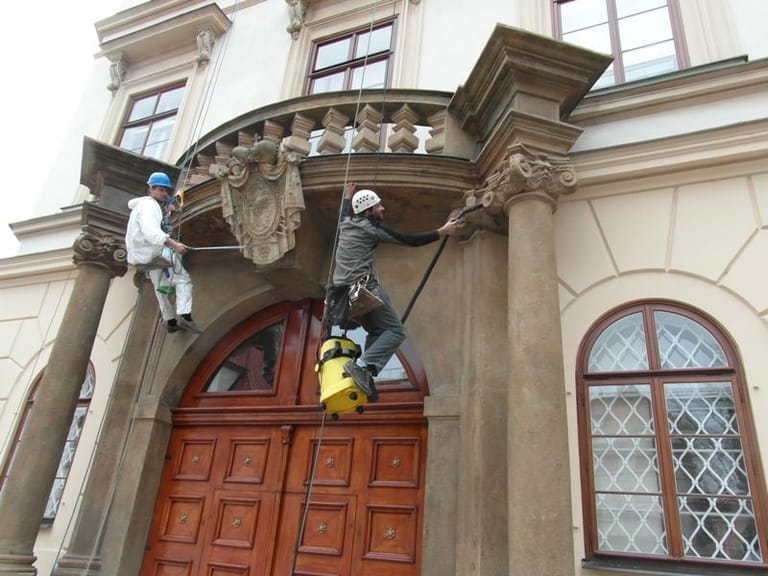
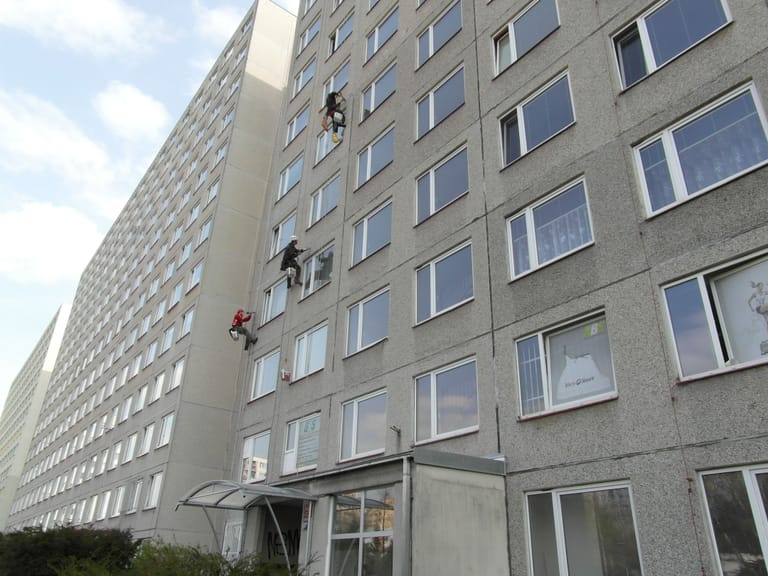
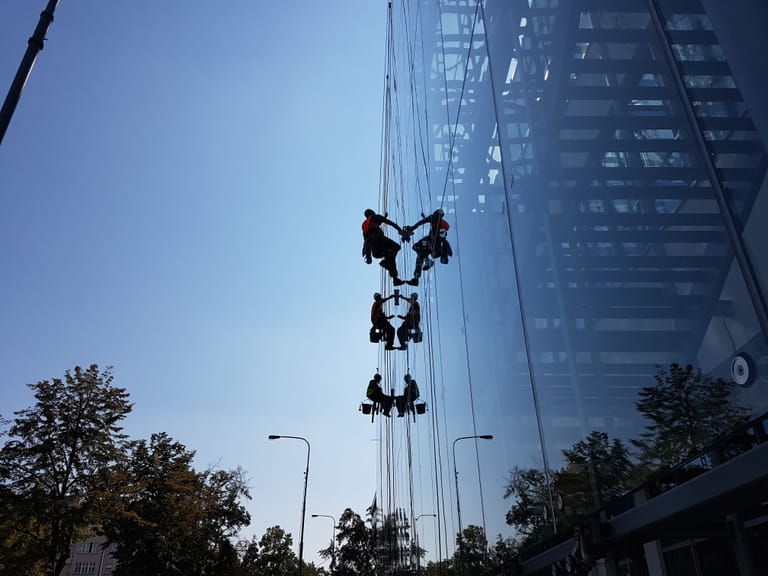
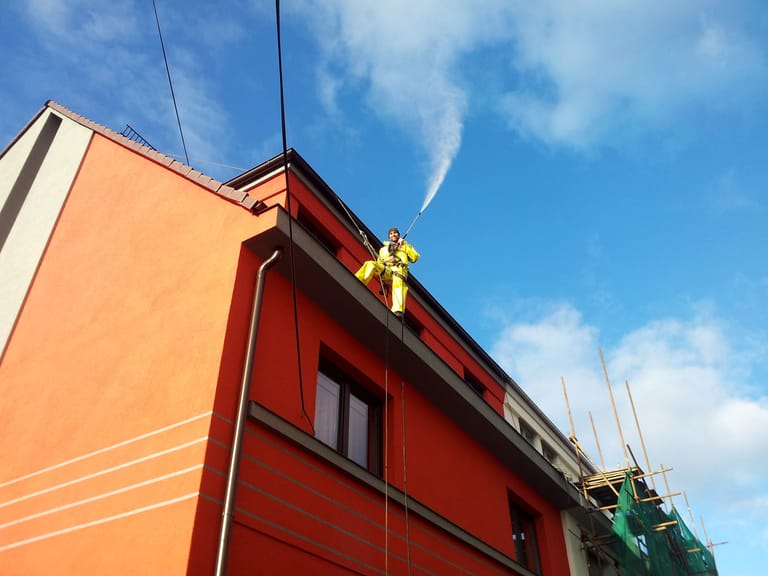
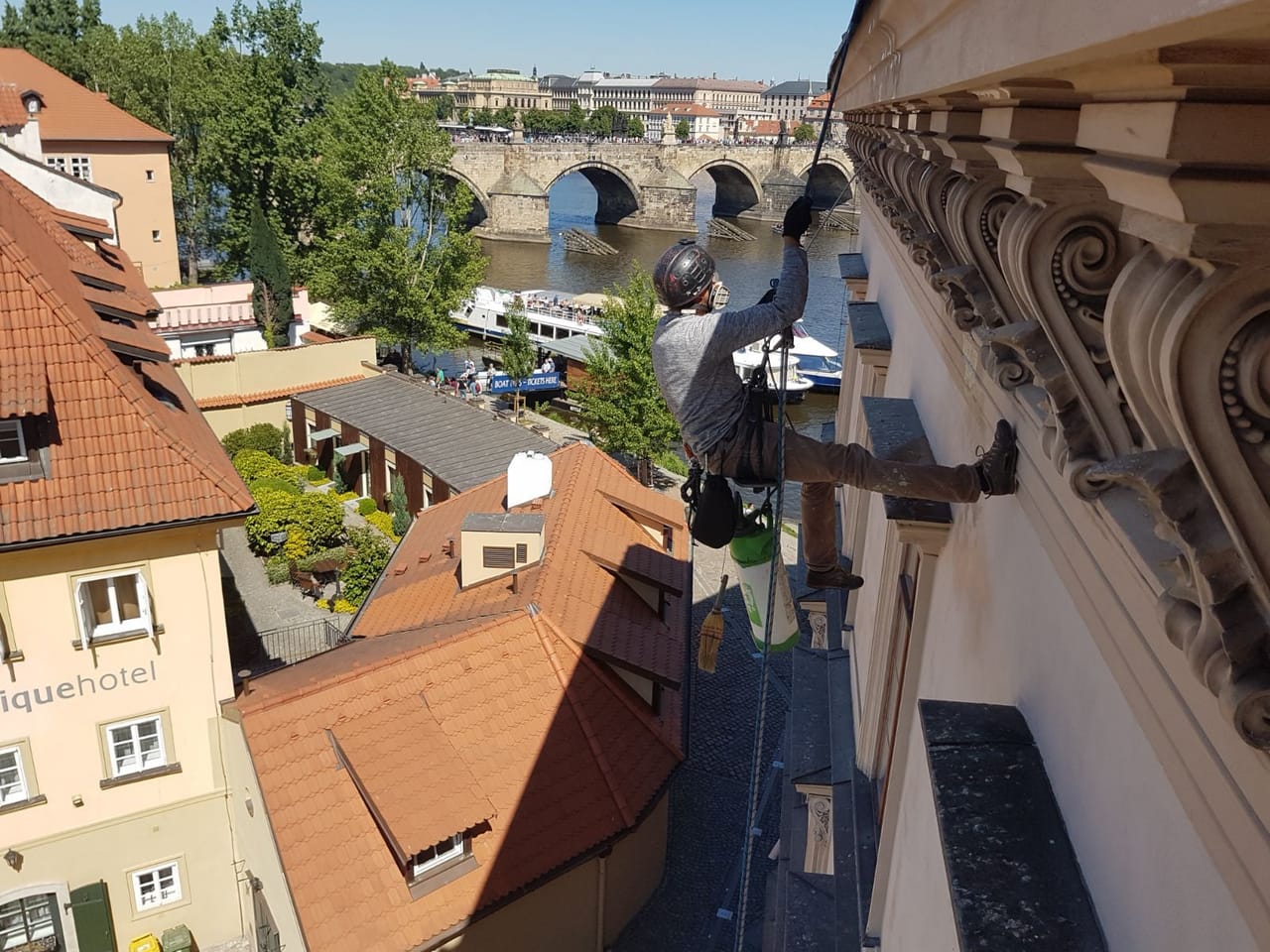
Working at height makes it possible to reach the damaged area quickly and without unnecessary preparations. In most cases, it is not necessary to build scaffolding, which significantly shortens the intervention time.
Key benefits include:
quick access to the damaged area
the possibility of intervention even in difficult-to-access locations
lower costs compared to scaffolding
minimal restrictions on the operation of the facility
quick temporary security
Thanks to this, most emergency situations can be resolved significantly faster than with classic construction procedures.
Frequently asked questions
What is considered an emergency
A state of emergency is considered to be a situation where a damaged part of the building threatens people, property or may cause further damage.
How quickly the accident needs to be resolved
If there is a risk of part of the structure falling or leaking into the building, it is recommended to deal with the situation as soon as possible.
The extent of the damage can be judged from the photos
Yes. Photos often make it possible to preliminarily assess the seriousness of the situation and prepare an appropriate method of intervention.
Scaffolding is always necessary
Nope. In most cases, emergency interventions can be carried out using rope access equipment or a retractable platform.
Conclusion
Emergency work at height helps to quickly eliminate dangerous situations and prevent further damage to the building. Timely intervention is important not only from the point of view of property protection, but above all the safety of people moving around the building. If you are unsure of the severity of the damage, it is always best to have the condition assessed by a professional.