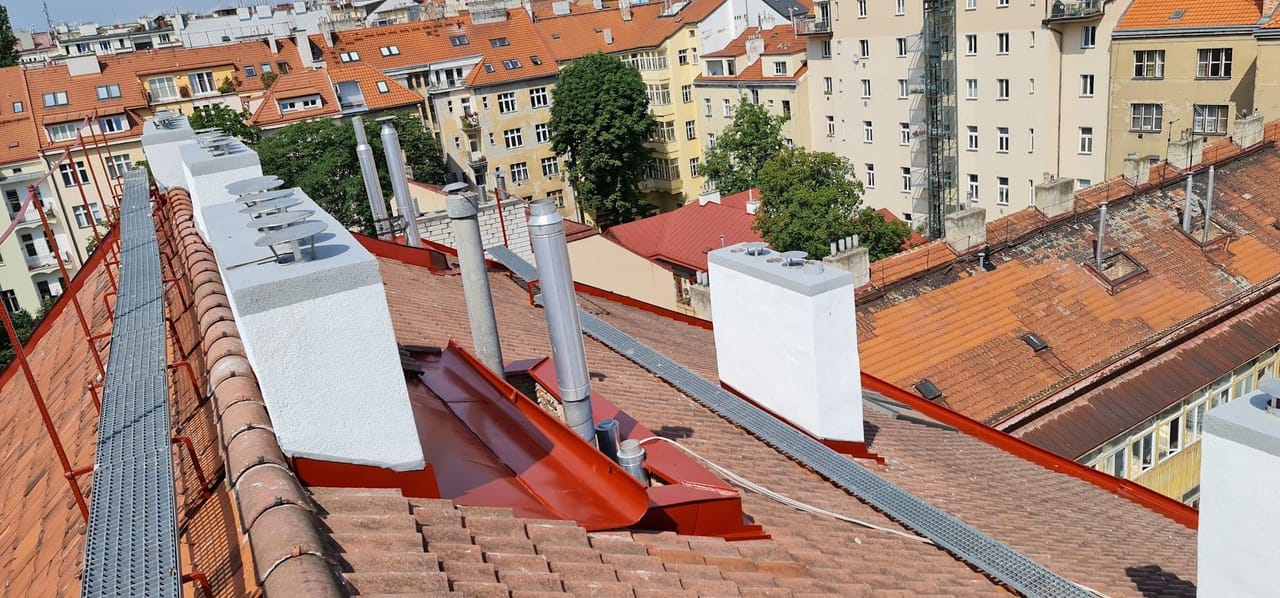
What is considered an emergency
A state of emergency means a situation where a damaged part of the building poses an immediate risk to people, property or the building itself. It most often occurs after strong wind, storms, intense rain or in the winter due to snow and ice.
The damage does not always have to be extensive at first glance. Even a loose roof tile or cracked cornice can pose a serious hazard.
The most common accidents on buildings
Among the most common causes of emergency interventions at height are:
loose roofing
damaged roof sheeting
leaking into the roof or facade
falling plaster
damaged cornices
loose parts of the chimney
overflowing or torn gutters
dangerous icicles and snow overhangs
broken branches or damaged trees
relaxed advertising structure
In most cases, it is important to address the situation as soon as possible to prevent further damage.
What to do first
If you suspect a malfunction, do not try to fix the problem yourself.
First it is advisable to:
ensure a safe distance from the damaged area
prevent other people from entering the risk area
take photos from a safe distance
to determine whether there is further loosening of parts of the structure
contact a specialist company
If there is an immediate danger to life or a structure may fall into a public area, contact the emergency services first.
Why emergency interventions are not worth postponing
Many property owners wait several days or weeks for repairs. During this time, however, the condition may deteriorate significantly.
For example, a small leak can damage the thermal insulation or the roof structure. Loose sheeting can cause more extensive damage to the building or surrounding property with further wind.
Prompt temporary stabilization is often far less expensive than repairing extensive damage later.
How an emergency intervention at high altitude takes place
Every situation is different, but the procedure is usually similar.
First, the severity of the damage and the method of safe access are assessed. The immediate danger is then removed, for example loose parts of the roof, facade or chimney.
If the situation allows, a temporary repair or temporary protection of the object against further damage may follow. The permanent repair is then planned according to the scope of the defect.
How to prepare information before contacting a company
For a faster evaluation of the situation, it is advisable to prepare some basic information.
Ideally, note down:
object address
a brief description of the problem
number of floors
photo or short video
telephone contact
information about whether there is a risk of falling onto the sidewalk or road
This information will help determine the appropriate course of action and shorten the time to arrival.
Frequently asked questions
How do I know it's an emergency?
If part of the building is in danger of collapsing, the leakage causes further damage or the safety of people is at risk, this is a situation that should be dealt with without undue delay.
I can remove the damaged part myself
In most cases this is not recommended. Work at height represents a significant risk and should be carried out by professionally trained persons.
How quickly it is appropriate to solve the accident
Ideally as soon as possible. The longer the damaged area is exposed to wind or rain, the greater the subsequent damage can be.
The state of emergency can be assessed from the photos
Yes. Photos will often allow experts to assess the severity of the situation and suggest an appropriate next course of action.
Emergency conditions on roofs, facades or chimneys should not be underestimated. Timely security of the building helps to protect not only the building itself, but especially the people moving around it. If you are unsure of the extent of the damage, it is always best to have a professional assess the situation.